 Dolomites Day Trips from Venice
Home › Guides › What to Wear in the Dolomites
What to Wear in the Dolomites
What to wear in Dolomites comes down to three layers and the right shoes: a sweat-wicking base, a warm midlayer, a waterproof shell and grippy hiking boots, because a 27°C day in Cortina can be 15°C on the summits and near 0°C in the evening. Pack for elevation, not for the Venice forecast.
Quick answer The short packing answer
Wear a sweat-wicking base layer, a warm midlayer and a waterproof shell with hiking boots or trail runners that grip. The same summer day can run 27°C in Cortina, 15°C on the summits and near 0°C after dark.
Key takeaways
- The rule that decides it: about 6.5°C colder for every 1,000 meters you climb, so one warm layer is always in the bag.
- Compare a dolomites day trip from venice with a hiking week, because the shoes differ most.
- Match your clothing to the month with the table below, from May through the October shoulder.
- Jeans are fine for evenings in Cortina and never right on the trail.
How do people dress in the Dolomites?
People dress in removable layers with grippy shoes for the trails and smart-casual mountain-town clothes in the evenings.
The mountain towns dress like the Alps anywhere: practical by day, relaxed but tidy at dinner. On the trail the look is technical and everyone carries a shell.
The three-layer system
A sweat-wicking base layer moves moisture off your skin. A warm midlayer, usually fleece or a light insulated jacket, handles the cold on ridgelines and cable car platforms. A waterproof shell over the top blocks rain and wind, and you carry it even in midsummer because thunderstorms arrive without warning.
Skip cotton base layers and denim on the trail. Cotton holds sweat and chills you fast when the temperature swings.
Add a hat, gloves, sunglasses and SPF even on a short walk. High-altitude sun is strong and the wind on an exposed ridge cuts through a thin jacket quickly.
Evenings in the towns
In Cortina d'Ampezzo or the villages of Alta Badia, normal travel clothes work: trousers, a sweater or light jacket, comfortable shoes. Nobody expects formal dress in hotel dining rooms, but flip-flops and gym shorts look out of place.
Bring one presentable outfit if your plan mixes viewpoints and dinners. The rest of the bag can be trail clothes.
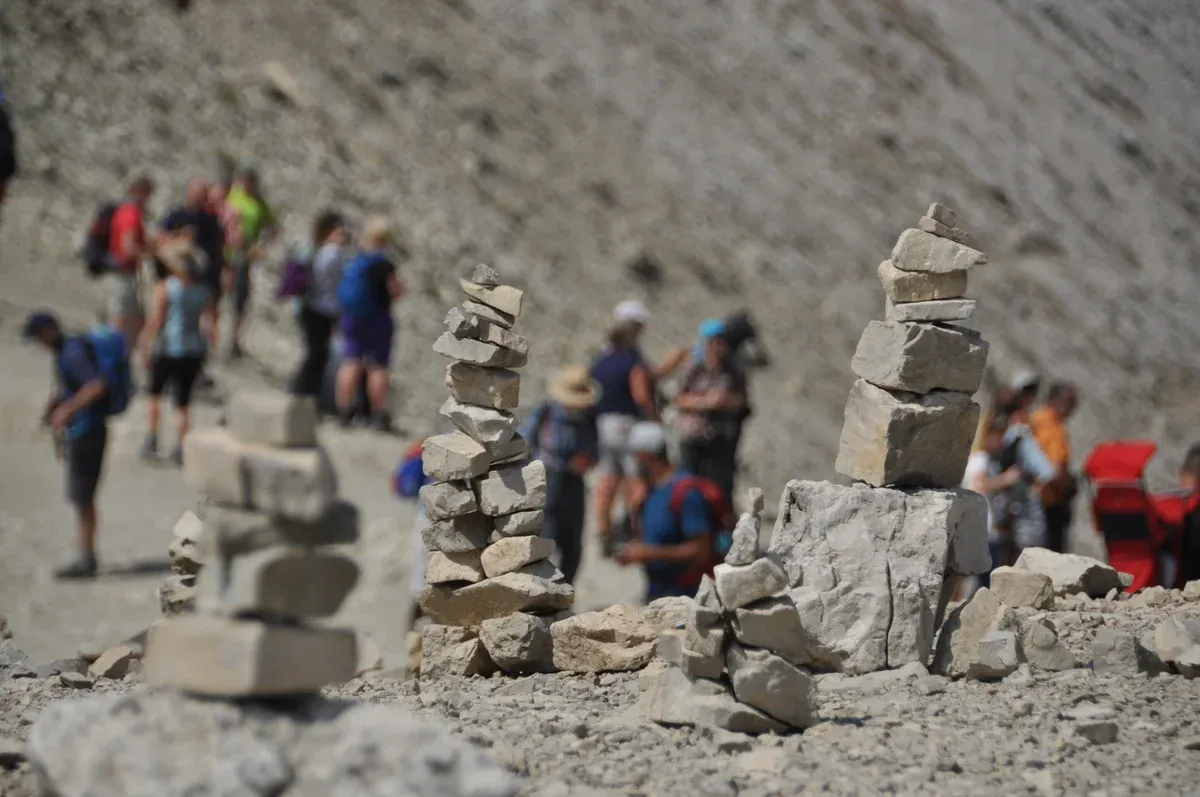
Hikers at the cairns on the Tre Cime circuit. Photo: Felvalen, CC BY-SA 4.0, via Wikimedia Commons
What should I pack for a trip to the Dolomites?
Pack the layered clothing system, grippy footwear, a 20 to 30 liter daypack with rain cover, sun protection, blister plasters, snacks and water.
One checklist covers both a day trip and a hiking week. The only real difference is the size of the bag and whether you need hut gear.
Dolomites packing checklist
Work down this list before you close the bag.
- Hiking boots or trail runners with real grip, broken in before the trip - Sweat-wicking base layer, no cotton - Warm midlayer, fleece or light insulation - Waterproof shell jacket and, for real hiking, shell trousers - Hiking leggings or trail trousers - Hat, light gloves, wraparound sunglasses, SPF 15 or higher - 20 to 30 liter daypack with a rain cover - Blister plasters and snacks - Water and a GPX map app or offline map - Swimsuit if your hotel has a spa - One sweater and clean shoes for evenings
Two extras matter only on specific trips. Trekking poles save your knees on the descents. A silk liner is required gear if you sleep in a rifugio dormitory. For hut-to-hut routes the bag grows to 35 liters carrying 5 to 8 kilograms, while a hotel-based trip needs only 20 liters with 3 to 6 kilograms inside.
What should I wear by month in the Dolomites?
Summer needs the full layer system with a shell, the shoulder season from late September to mid-October plus June needs a heavier midlayer, and from mid-October to early June winter gear rules.
The season bands are simple. Summer runs late June to early September, shoulder season covers late September to mid-October plus June, and spring plus winter gear applies from mid-October to early June.
Month-by-month clothing table
Use the valley forecast as your starting point, then add a layer for every big climb.
| Month | What it feels like | What to wear |
|---|---|---|
| May | Winter gear still applies, spring trails can hold snow | Insulated jacket, warm hat, gloves, waterproof boots, microspikes strongly recommended for spring hiking tours |
| June | Shoulder season, a good month to visit | Base layer, midlayer, shell, trail trousers, grippy boots |
| July | Summer, hot valleys, cold ridgelines, thunderstorms | Wicking base, light midlayer, waterproof shell even at noon, hat and SPF |
| August | Summer, same pattern as July | Same as July, plus rain cover on the daypack |
| September | Summer ends early in the month, shoulder season from late September | Layer system plus a warmer midlayer and light gloves |
| October | Shoulder season to mid-month, winter gear after mid-October | Warm midlayer, shell, hat and gloves, then full winter kit |
| November to April | Winter conditions | Insulated layers, waterproof boots, warm hat and gloves |
The elevation rule that decides your bag
For every 1,000 feet climbed the temperature drops by 3.6°F, which is 6.5°C per 1,000 meters. An 80°F / 27°C day in Cortina or Alta Badia can be 60°F / 15°C on the summits and fall to the 30s°F / around 0°C in the evening, while valley floors reach 80°F / 25°C in summer.
Turn that into one habit. Check the valley forecast, take off 6.5°C for every 1,000 meters between the town and your highest point, and make sure the warmest layer in your bag covers the result.
Do I need hiking shoes in Dolomites?
Yes on any trail, because hiking boots or trail runners with grip are listed as essentials and road-running shoes or sneakers are not appropriate for hiking, climbing, trail running or via ferrata.
Shoes are the one item travellers get wrong most often. The rocky limestone paths punish soft soles.
Boots, trail runners or sneakers
Hiking boots suit rough trails, scree and any route with a loaded pack. Trail runners with grippy soles work for fit walkers on marked paths in dry summer conditions. Plain sneakers and road-running shoes fail on both grip and ankle support, and the mountain operators rule them out for hiking, climbing, trail running and via ferrata outright.
Break your footwear in before the trip and carry blister plasters regardless. On spring routes add microspikes, and the Marmolada Glacier requires sturdy boots that accept crampons.
If your day is strictly a viewpoint visit with cable cars and lakeside promenades, sturdy trainers will carry you. Anything described as a walk or a hike needs the grippy option.
Tours That Fit
Guided day trips handle the driving, so your packing list stays short.

Dolomites Day Trip with Cortina and 2 Lakes
Longest stop is 2.25 hours at Lake Misurina plus an hour in Cortina, capped at 8 travelers per minivan.
- Cancellation
- Free cancellation 24h
- Operator
- Bea Vita Tours
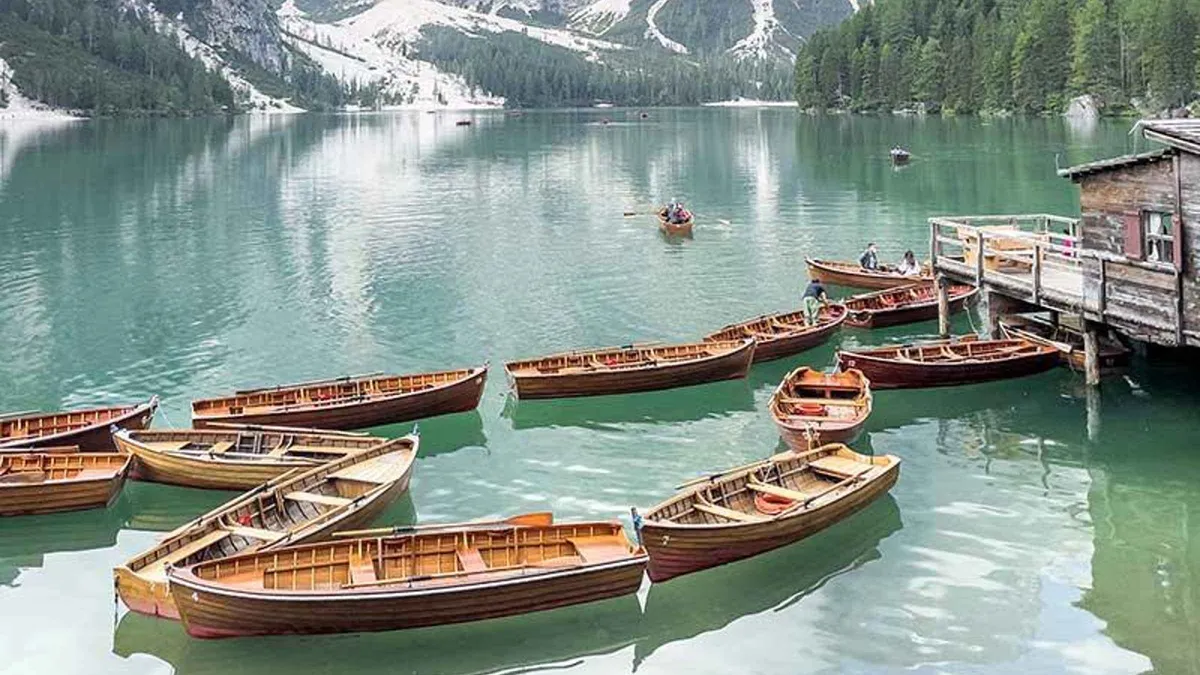
Dolomiti, Lake Braies and Tre Cime di Lavaredo
The only one of these tours with a winter snowmobile option to Monte Piana, capped at 8 people, at $110 per person.
- Cancellation
- Free cancellation 24h
- Operator
- Esse Group
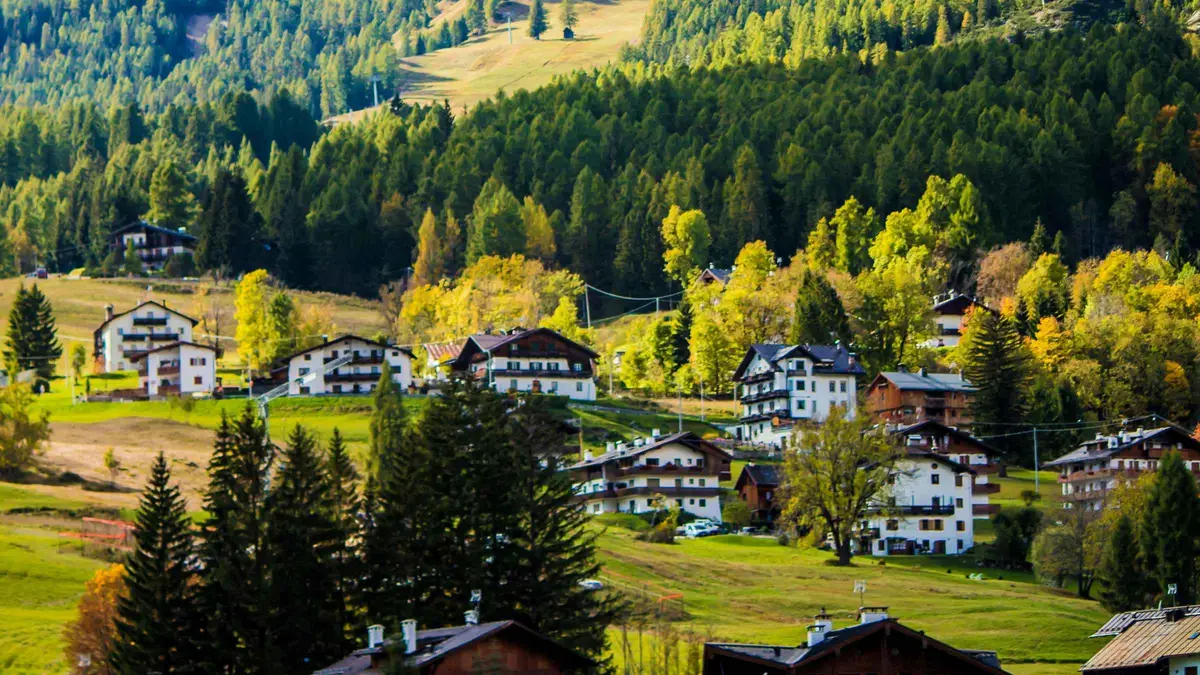
Full-Day Tour of the Dolomites and Braies Lake
Small Mercedes minivan with a dedicated pass that drives right to Lake Braies, plus Pieve di Cadore, Auronzo, Misurina and Cortina in one day.
- Cancellation
- Free cancellation 24h
- Operator
- DFP Travels
What should I wear on a day trip versus a hiking week?
A day tripper needs grippy shoes, one midlayer and a shell in a small daypack, while a hiker adds shell trousers, poles, a 30 liter pack and hut gear.
Most visitors from Venice see the mountains on a guided day, not a trek. The kit is smaller but the layer rule still applies, because the same summit temperatures meet you either way.
Day trip kit
Wear your hiking shoes, a base layer and a midlayer, and carry the shell plus hat, gloves, sunglasses, SPF, water and snacks in a small pack. Lakeshore paths are gravel, so real walking shoes matter even on a tour.
On a guided Dolomites Day Trip with Cortina and 2 Lakes at $107 per person over 9 hours, you spend 2.25 hours walking and eating at Lake Misurina, high above Venice, where the 6.5°C rule bites.
Leave the big bag at the hotel. A 20-liter pack carrying 3 to 6 kilograms covers a hotel-based day.
Hiking week kit
A hut-to-hut route needs a 35 liter pack with 5 to 8 kilograms inside, shell trousers, trekking poles and a silk liner for the rifugio dormitories. Add light spare shoes for the evenings in the hut.
Can tourists wear jeans in Italy?
Yes, tourists wear jeans all over Italy, and they are fine for Dolomites town evenings, but denim should never go on the trails.
The answer splits in two, town and trail, and the trail side is strict.
Jeans off the trail
In Cortina d'Ampezzo and the villages, jeans with a sweater and decent shoes look completely normal at dinner or on a lakeside stroll. Italians dress neatly, so clean and fitted beats baggy and worn.
On the trail the guidance is blunt: avoid denim at all costs. Jeans get heavy with sweat or rain, dry slowly and rub, and cotton base layers fail the same way. Pack trail trousers or hiking leggings instead and save the denim for the evening.
What should I carry in my daypack?
Carry water, snacks, blister plasters, SPF, a hat, sunglasses, a rain cover and a map app, with a 20 to 30 liter pack covering most days.
A backpack or vest filled with snacks, blister plasters and SPF plus headgear such as a hat or bandana are non-negotiable items for the trail.
Daypack contents
Water comes first, then snacks for the energy dips on climbs. Blister plasters earn their space on the first long descent. SPF 15 or higher, wraparound sunglasses and a hat protect you at altitude where the sun is sharper than the air temperature suggests.
A rain cover for the pack keeps everything dry when a summer thunderstorm arrives. A GPX map app with the route downloaded helps because phone signal is patchy on the trails. Start early and tell someone your plan if you walk alone.
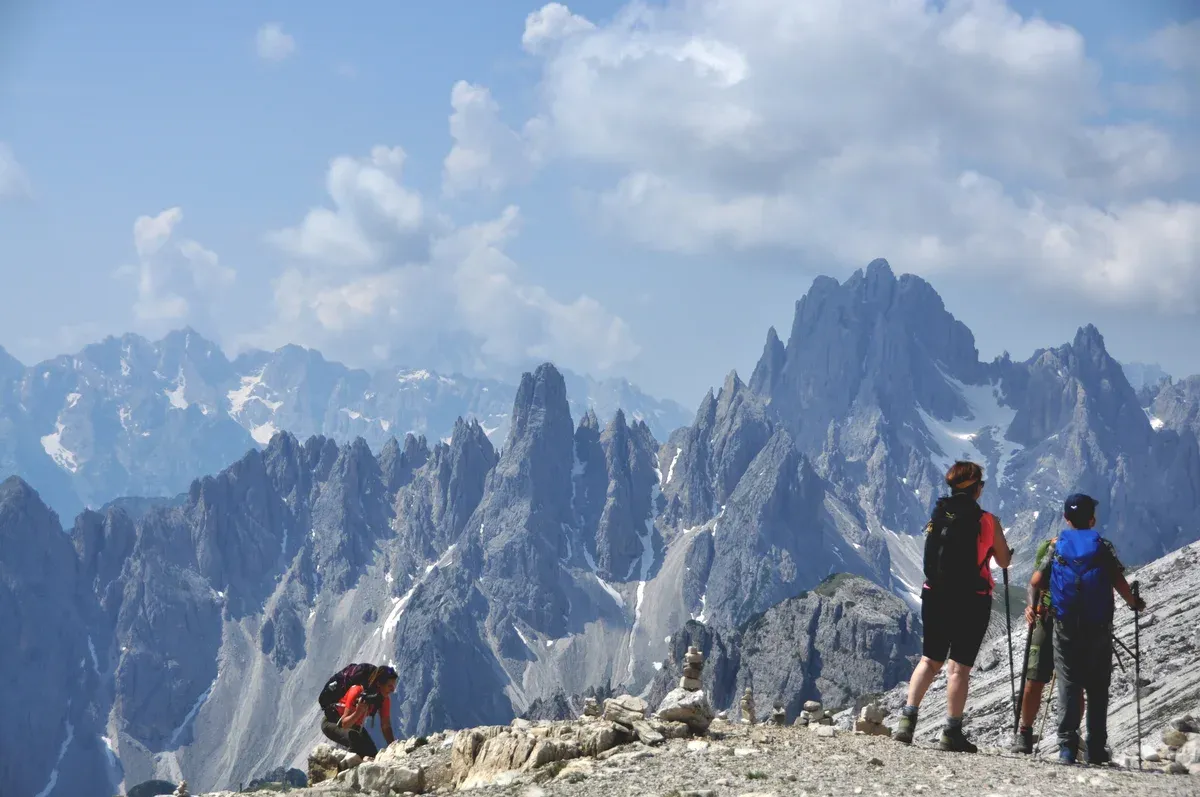
Hikers with poles and jackets on a Dolomites trail. Photo: Felvalen, CC BY-SA 4.0, via Wikimedia Commons
What do day tours provide and what is on you?
The tours provide transport and the itinerary while you bring your own layers, grippy shoes, water and sun protection.
Plan to bring your own gear on a day trip. The list above is yours to pack, and nothing on it weighs much.
What that means for a day tour
On The Best of the Dolomites Mountains Day Trip at $111 per person over 10 hours, and on Dolomiti, Lake Braies and Tre Cime di Lavaredo at $110 per person over 9 hours, the vehicle covers the long transfer from Venice and you cover the mountain weather with your own kit.
Wear the shoes, wear the layers, and keep the shell and daypack items with you on board. Coach and minivan days still climb to mountain lakes where the 6.5°C rule applies.
Dolomites Clothing FAQ
What should I wear hiking in the Dolomites?
Wear a sweat-wicking base layer, a warm midlayer and a waterproof shell with hiking boots or grippy trail runners, plus hat, gloves, sunglasses and SPF. Avoid denim and cotton on the trail, and carry blister plasters.
What should I wear in the Dolomites in July and August?
Wear summer hiking kit: wicking base, light midlayer and a waterproof shell, because hot valleys at 25°C can mean 15°C on the summits and thunderstorms arrive randomly in the late June to early September season.
What should I wear in the Dolomites in September?
Wear the summer layer system with a warmer midlayer and light gloves, because late September opens the shoulder season and the summit chill arrives earlier in the day.
What should I pack for the Dolomites in June?
Pack shoulder-season kit: base layer, midlayer, shell, trail trousers and grippy boots, since June sits in the shoulder band and is described as a good time of year to visit.
Do you really need hiking boots for the Dolomites?
You need hiking boots or trail runners with real grip on any trail, and road-running shoes or sneakers are ruled out for hiking, climbing, trail running and via ferrata.
What should I wear in the Dolomites in October and May?
Wear shoulder-season layers to mid-October and full winter gear from mid-October, while May still needs winter kit including a warm hat, gloves and microspikes, which are strongly recommended for spring hiking tours.
What should I pack in my daypack for the Dolomites?
Pack water, snacks, blister plasters, SPF, a hat, sunglasses, a rain cover and an offline map in a 20 to 30 liter daypack.
What shoes should I wear on a Dolomites day trip from Venice?
Wear grippy walking shoes, because day trips stop for walks on the lakeshore paths at Lake Misurina and Lake Braies. See the stops on the Full-Day Tour of the Dolomites and Braies Lake page.
More Guides
- When Is the Best Time to Visit the Dolomites?
Road, lift and Lake Braies dates for 2027: the Col de Varda chairlift runs 18 June to 20 September. See the month-by-month table.
- Dolomites vs Alps
Dolomites vs Alps compared for 2027: scenery, hiking, skiing, crowds and the day trip from Venice. See which range fits your trip and book a day tour.
- How Many Days in the Dolomites?
How many days in the Dolomites in 2027: 5 to 7 for a stay, 1 or 2 from Venice. Pick your number and compare day trips.